 InspoPlate
Pan-Seared Sea Bass with Lemon-Caper Rice Noodles
Crispy pan-seared sea bass paired with bright lemon-caper rice noodles offers a Mediterranean-inspired meal focusing on technique and fresh herbs.

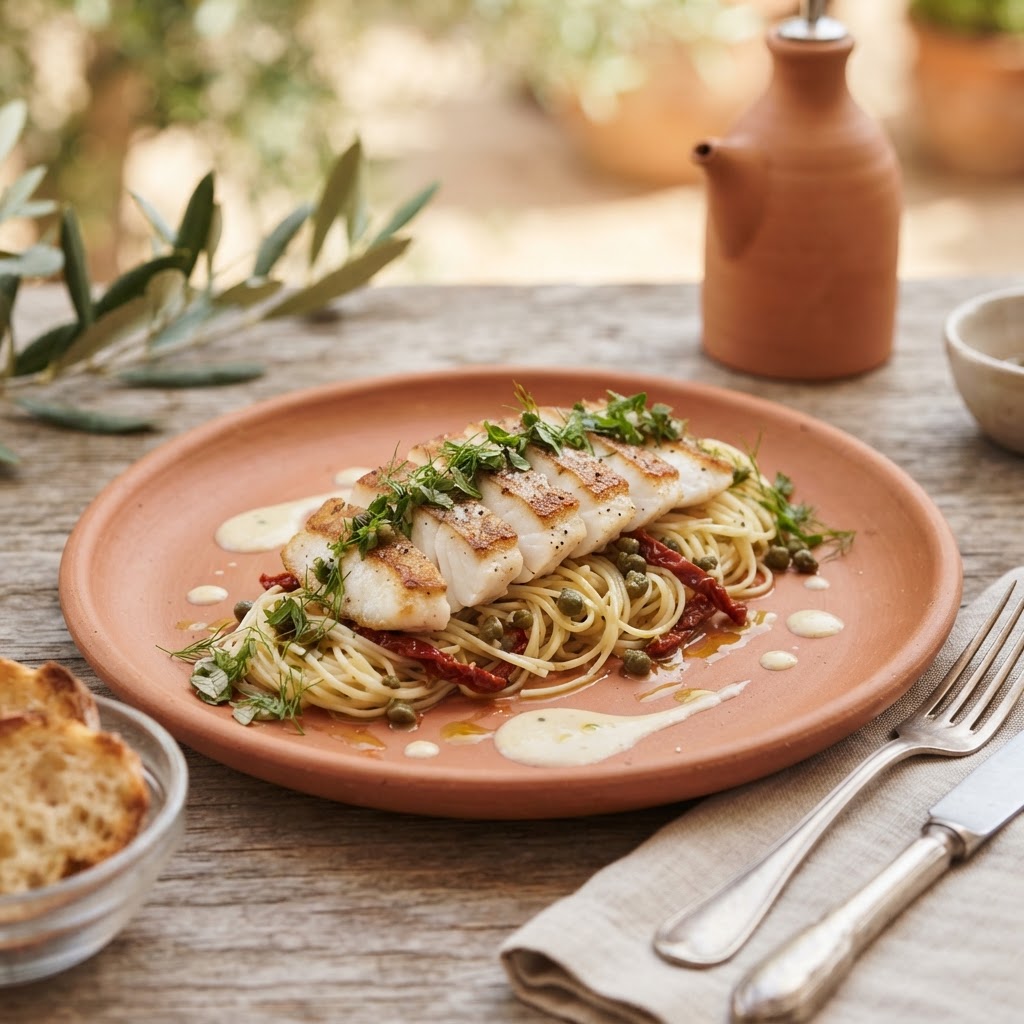
Pan-Seared Sea Bass with Lemon-Caper Rice Noodles
Transport your kitchen to a Mediterranean olive grove with this elegant Pan-Seared Sea Bass with Lemon-Caper Rice Noodles. The combination of crispy-skinned fish and a bright, zesty emulsion creates a sophisticated dinner that feels like a rustic getaway.
This dish balances the rich, buttery texture of fresh sea bass with the tangy, floral notes of preserved lemon and savory capers. It is a refined meal that highlights how simple, high-quality ingredients can come together for a vibrant dining experience.
Recipe Snapshot
🍽 Serves: 2 🔥 Calories: 480 per serving 💪 Protein: 34g 🍞 Carbohydrates: 42g 🥑 Fat: 18g ⏱ Prep Time: 20 minutes 🍳 Cook Time: 15 minutes
Ingredients
Pan-Seared Sea Bass
- 12 oz fresh sea bass fillets (sub: cod fillets)
- 1 tbsp extra virgin olive oil (sub: grapeseed oil)
- 1/2 tsp kosher salt (sub: sea salt)
Lemon-Caper Rice Noodles
- 6 oz dry rice noodles (sub: vermicelli pasta)
- 2 tbsp capers, rinsed and chopped (sub: green olives, chopped)
- 2 tbsp sun-dried tomatoes in oil, julienned (sub: fresh Roma tomatoes)
- 2 cloves garlic, thinly sliced (sub: 1/2 tsp garlic powder)
- 1 tbsp preserved lemon peel, finely minced (sub: fresh lemon zest)
- 3 tbsp extra virgin olive oil (sub: avocado oil)
- 1 tbsp fresh lemon juice (sub: white wine vinegar)
Herb Garnish
- 1/4 cup fresh oregano leaves (sub: 1 tbsp dried oregano)
- 1/4 cup fennel fronds, minced (sub: fresh dill)
How to Make Pan-Seared Sea Bass with Lemon-Caper Rice Noodles
Pan-Seared Sea Bass:
- Pat the sea bass fillets extremely dry on both sides with paper towels.
- Season the skin side generously with kosher salt.
- Heat olive oil in a heavy skillet over medium-high heat until shimmering.
- Place fish skin-side down and press gently with a spatula for 10 seconds to ensure even contact.
- Cook for 4-5 minutes until the skin is golden and crispy, flip, and cook for 1-2 minutes more until opaque.
Lemon-Caper Rice Noodles:
- Boil a pot of water, remove from heat, and soak rice noodles for 4 minutes until al dente.
- Drain noodles, reserving 2 tbsp of the starchy water.
- In the same skillet used for the fish, add the remaining olive oil over medium heat.
- Sauté the garlic, sun-dried tomatoes, and capers until fragrant.
- Add the noodles, reserved water, preserved lemon, and lemon juice; toss quickly to emulsify the sauce and coat the noodles.
Herb Garnish:
- Gently toss the oregano leaves and minced fennel fronds in a small bowl.
- Sprinkle the herb mixture over the fish and noodles immediately before serving for a vibrant aromatic finish.
Tips for Best Results
- To achieve a restaurant-quality sear on the fish, ensure the skin is patted completely dry with a paper towel and the pan is smoking hot before adding the fillets.
- When cooking rice noodles, undercook them slightly by 30 seconds; they will finish cooking and absorb the flavor of the lemon-caper emulsion in the pan.
- Use a heavy-bottomed stainless steel or cast iron skillet to maintain consistent heat, which is essential for the crust development on the sea bass.
- The preserved lemon is intense; mince it finely to ensure the saltiness and floral notes are evenly distributed through the sauce without overwhelming the palate.
Plating & Presentation
For a professional touch, use a ring mold to stack the noodles in the center of the plate, providing height and elegance. Place the crispy sea bass fillet on top or alongside the stack, then finish with a generous sprinkle of the fresh oregano and fennel frond mixture.
FAQ
Q: Can I substitute the sea bass? A: Yes, cod fillets are an excellent alternative for this recipe. Q: What is a substitute for preserved lemon? A: You can use fresh lemon zest to achieve a similar brightness. Q: How do I get the skin crispy? A: Ensure the fillet is completely dry and the skillet is properly preheated before searing. Q: Can I use green olives instead of capers? A: Yes, chopped green olives provide a similar brine and salinity to the dish.
Final Thoughts
This Mediterranean-inspired dish brings the rustic charm of an olive grove directly to your table with its bold, aromatic profile. It is the ideal choice for anyone looking to master the art of searing fish while exploring complex, zesty flavor profiles in under an hour.
A Note from Katia
Thank you for spending a few minutes cooking with me today.
Whether tonight's dinner is something simple or something special, I hope this recipe reminds you that great meals don't require complicated ingredients—just a little inspiration.
Every recipe on InspoPlate is created with the hope of making home cooking easier, more creative, and more enjoyable.
Happy cooking,
— Katia
I created InspoPlate to solve one simple question: "What am I going to cook today?" My mission is to help home cooks transform the ingredients they already have into beautiful, restaurant-worthy meals while building confidence in the kitchen.
Never wonder what to cook again.
Every great meal begins with the ingredients you already have. InspoPlate transforms what's already in your kitchen into personalized recipes, beautiful plating ideas, nutrition insights, and smart shopping lists—helping you cook with more creativity, confidence, and less food waste.